


 +86 18130251359
 teflowpumps@tlpumps.com



The fluorochemical industry is a segment within fine chemicals with extremely high corrosion challenges. Its products include hydrogen fluoride, hydrofluoric acid, fluorosilicic acid, fluoride salts, fluoromonomers, fluororesins and more, widely applied in new energy, semiconductors and advanced chemical materials. Across processes such as fluorination reaction, fluoromonomer synthesis, fluororesin polymerization and rectification, feed liquid extraction, pickling, and fluorine-containing waste liquid treatment, most media involve HF (hydrofluoric acid). Ordinary stainless steel and alloy pumps are highly susceptible to corrosion, pitting and ion leaching. In the event of pump leakage, not only material loss and safety hazards occur, but impurities entering the process will directly impair the quality of finished fluoromonomers and fluororesins. Combining mainstream working conditions in fluorochemical production, this article explains pump selection logic and application essentials for this sector.
I. Working Condition Pain Points of Each Fluorochemical Process
1. Fluorination Reaction & Fluoromonomer Synthesis: Media are mostly anhydrous hydrogen fluoride and mixed hydrofluoric acid systems with large temperature fluctuations. Some working conditions contain trace solid fluoride particles. Corrosion is extremely severe with high risk of seal failure. Direct metal contact with process fluid is strictly prohibited. Low impurity leaching is required to prevent side reactions.
2. Rectification & Extraction Processes: Process fluids are mainly clear fluorine-bearing liquids, often under negative pressure and prone to vaporization with prominent cavitation risks. Stable pump operation directly determines rectification and separation efficiency. Bubble-induced flow fluctuation and seal damage are unacceptable.
3. Pickling & Post-Treatment of Fluororesins: Mixed acid environment of hydrofluoric acid and fluorosilicic acid. Some systems tend to form fluoride salt crystals that may deposit in flow paths, blocking pump cavities and channels. Smooth flow passages and corrosion-resistant, stable materials are required.
4. Fluorine-Containing Waste Liquid Treatment: Waste liquid consists of hydrofluoric acid, fluoride salts and neutralized fluorine-bearing wastewater with complex composition and minor settled solids. Materials must resist HF corrosion while delivering wear resistance to avoid environmental risks caused by leakage.
Core bottom lines for fluorochemical pump selection: hydrofluoric acid resistance, zero leakage, fluorine-lined construction, low metal ion leaching and good cavitation resistance. Standard 316L, duplex steel and Hastelloy alloys deliver poor long-term reliability in HF media and are not recommended as wetted materials.
II. Recommended Pump Type: Fluorine-Lined Magnetic Drive Pump
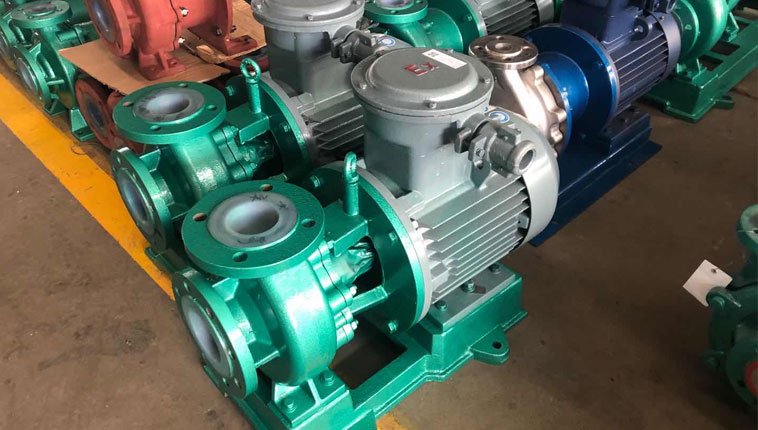
The fluorine-lined magnetic drive pump is the preferred pump type for mainstream fluorochemical processes. Its wetted components feature FEP/PFA lining. With no shaft seal or mechanical seal and power transmitted via magnetic coupling, it fundamentally eliminates leakage and perfectly meets the stringent requirements of fluorochemical applications.
HF Corrosion Resistance: FEP and PFA fluoroplastics exhibit outstanding resistance to hydrofluoric acid, hydrogen fluoride and fluorosilicic acid. They resist attack by fluoride ions and avoid fluorine embrittlement or dissolution seen with metals, enabling low ion leaching and safeguarding the purity of fluoromonomers and fluororesins.
Leak-Free Construction: Elimination of mechanical seals removes risks of sealing surface wear and corrosion failure of seal springs. It suits transfer of high-risk fluorine-containing media in fluorination reactions and elevates on-site safety.
Anti-Crystallization & Optimized Flow Path: Integrally molded fluorine lining for pump cavity and impeller delivers smooth inner surfaces to reduce fluoride salt scaling. The widened flow passage design tolerates fine fluoride salt particles and lowers pump clogging risks.
Cavitation Resistance Advantage: Impeller geometry of this series can be optimized to reduce required net positive suction head (NPSHr), adapting to vaporization-prone conditions such as rectification discharge and negative-pressure extraction and mitigating cavitation damage. For severe cavitation scenarios, low-level tanks and pre-feed structures can be deployed alongside the pump.
Application Scope: Hydrofluoric acid transfer, fluorination reaction circulation, circulation in fluororesin pickling tanks, extraction feed liquid transfer, fluoride salt-bearing liquid transfer and fluorine-containing waste liquid transfer. It serves as the primary pump for continuous fluorochemical production.
III. Supplementary Pump Types for Specific Conditions
1. Fluorine-Lined Centrifugal Pump (with external mechanical seal, limited to low-risk conditions)
This pump also features full fluoroplastic lining for HF resistance but relies on mechanical seals. It is not recommended for anhydrous hydrogen fluoride, high-concentration hydrofluoric acid or the main loop of continuous reaction circulation. It may only be used for branch lines transferring low-concentration fluorine-containing waste liquid at ambient temperature, low pressure and low vaporization tendency. A properly configured seal flush plan and regular seal maintenance are mandatory, as leakage risks remain.
2. Fluorine-Lined Self-Priming Magnetic Drive Pump
Built on the fluorine-lined magnetic drive pump with added self-priming capability. Designed for lifting fluorine-containing waste liquid from waste pits and underground tanks to handle feeding when the liquid level sits below the pump. It retains the seal-free design and low-leaching fluorine lining. The self-priming lift must be controlled to avoid cavitation.
IV. Critical Considerations for Fluorochemical Pump Sizing
1. Material Selection: FEP lining is suitable for regular hydrofluoric acid and fluoride salt solutions. PFA is preferred for elevated temperatures, high-purity fluoromonomers and premium fluororesin production for superior heat resistance and permeation resistance.
2. Prioritize Cavitation Verification: For rectification, flash evaporation discharge and negative-pressure extraction, cavitation margin calculation takes priority over flow rate and head. Low-NPSHr custom impeller versions should be selected when necessary.
3. Solid Particle Control: If feed liquid carries high loads of fluoride salt solids, pre-filtration is recommended to reduce lining erosion and extend pump service life.
4. Start-Stop and Maintenance Guidelines: Fluorine-containing media tend to crystallize. Flush the pump cavity promptly after shutdown to prevent fluoride salt crystals from seizing the impeller. Magnetic drive pumps must never run dry; dry running can rapidly cause thermal deformation of fluoroplastic lining and demagnetization of magnetic assemblies.
5. Safety Accessories: For transferring high-risk media such as anhydrous hydrogen fluoride, pumps should be equipped with leak detection and containment protection to comply with fluorochemical safety regulations.
V. Summary
The severe corrosion threat in fluorochemical processes mainly stems from hydrofluoric acid and fluoride ions. Material specification and sealing structure are the two core pillars of pump selection. Thanks to its seal-free zero-leakage design, HF-resistant fluoroplastic construction, low ion leaching and customizable anti-cavitation geometry, the fluorine-lined magnetic drive pump stands as the first choice across fluorination reactions, fluororesin manufacturing, rectification, extraction, pickling and waste liquid treatment. Fluorine-lined centrifugal pumps and fluorine-lined self-priming magnetic drive pumps are supplementary options limited to branch circuits and waste liquid applications. Proper pump selection ensures long-term stable operation of fluorochemical facilities, mitigates safety hazards from fluorine-medium leakage and sustains consistent yield of fluorine materials.



 +86+0563-5093318

